Key Takeaways
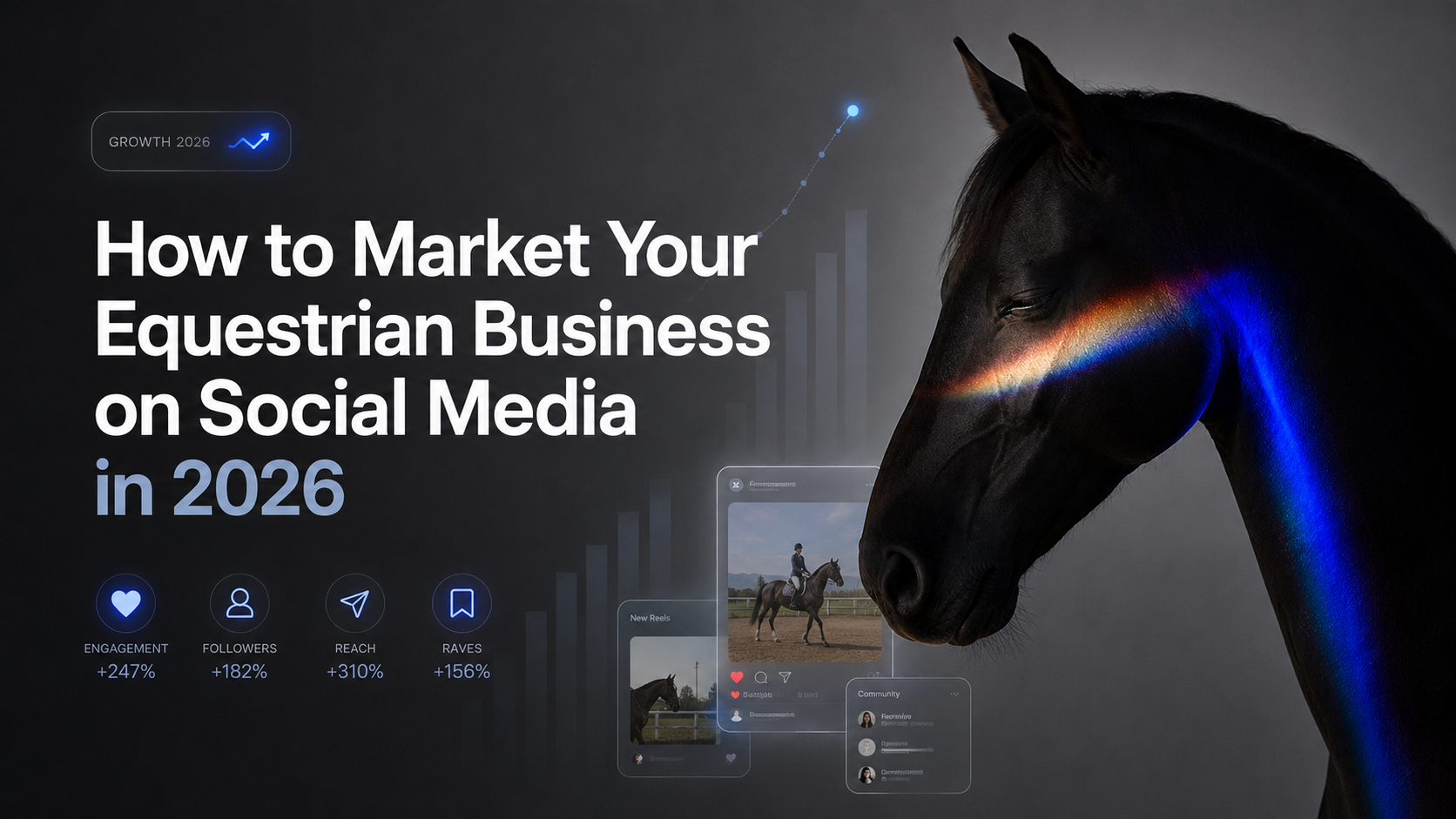
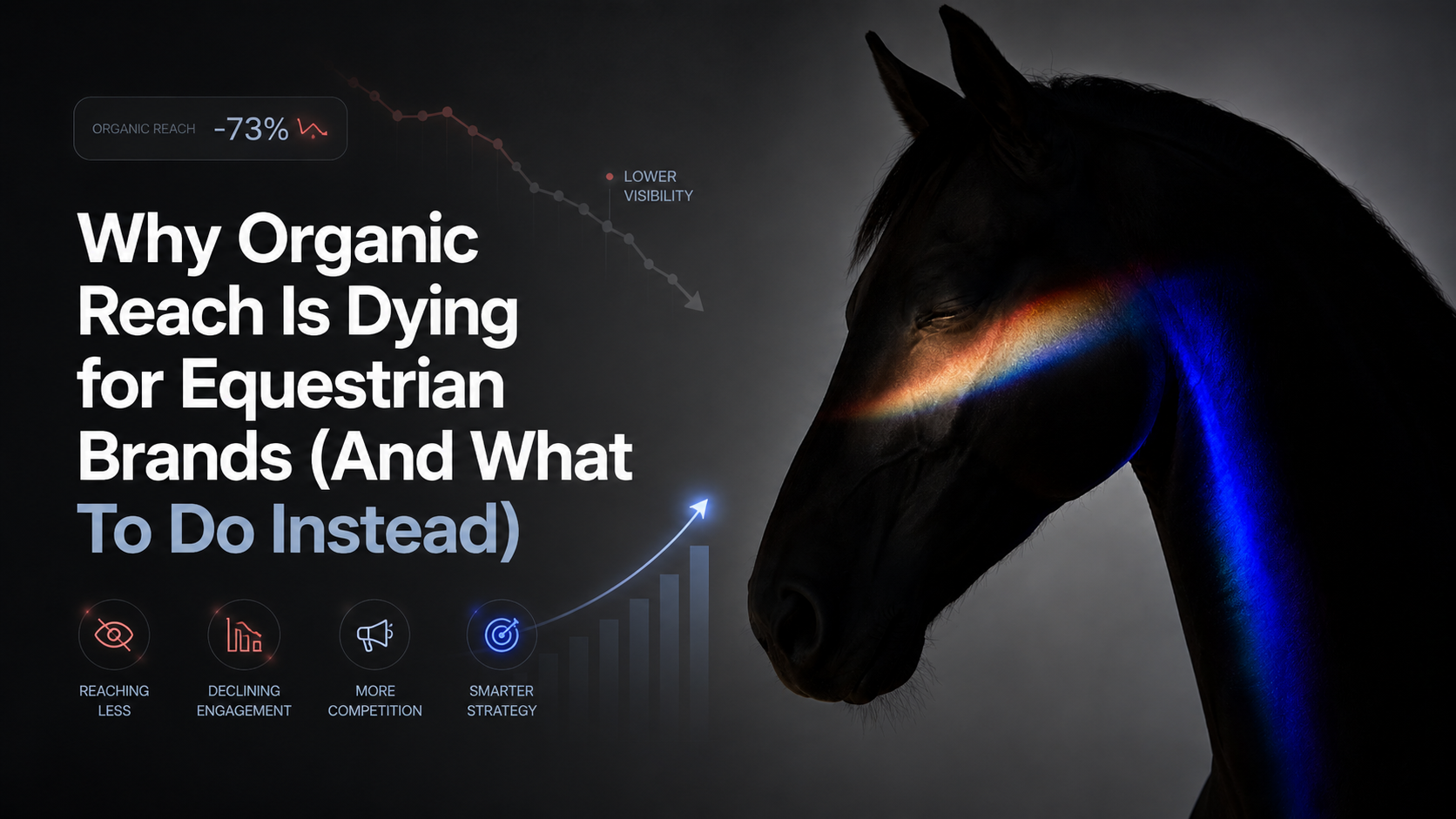
- Organic reach on Facebook and Instagram has declined to 2–5% for most brand pages (HubSpot, 2026) — most equestrian posts are seen by almost no one without paid support or distribution partnerships.
- Video content generates 3x more engagement than static images across social platforms (Sprout Social, 2026).
- Long-term influencer partnerships deliver 2.4x higher ROI than single sponsored posts (Klear, 2025).
- Equestrian brands that combine content with owned-audience distribution grow audiences significantly faster than those relying on organic posting alone.
Most equestrian brands approach social media the same way. They post consistently, use the right hashtags, show beautiful horses, and wait for the results that never quite arrive. The problem isn't the content. It's that equestrian social media marketing has fundamentally changed — and most advice in this industry hasn't caught up.
This guide covers what actually works for horse brands, riding schools, equestrian events, product companies, and travel operators trying to build a real presence online in 2026.
What Has Changed in Equestrian Social Media Marketing?
Organic reach across Facebook and Instagram has collapsed to between 2% and 5% for most brand pages, down from 16% a decade ago (HubSpot, 2026). For an equestrian brand with 10,000 followers, that means fewer than 500 people see any given post without paid amplification or external distribution. The platforms were built to keep users scrolling — not to hand brands free reach.
Three things have shifted the game:
Reach is now a paid commodity
Social platforms restrict organic visibility because they monetise reach through advertising. The brands winning on social media are either paying to boost content, partnering with accounts that have built existing audiences, or both.
Short-form video has become the dominant format
By 2026, video content generates three times more engagement than static images across major platforms (Sprout Social, 2026). In the equestrian space, training sequences, behind-the-scenes barn footage, and rider stories consistently outperform product shots. Reels and short clips drive algorithmic distribution in ways static posts cannot.
Equestrian audiences are increasingly specific
Horse buyers, riders, event spectators, and farriers are not the same audience. Equestrian social media marketing that treats "horse people" as a single segment underperforms marketing that speaks directly to a specific discipline, budget, or buying stage.
According to Sprout Social's 2026 analysis, video posts generate 3x more engagement than image posts across major platforms. In the equestrian niche, content featuring genuine horse-human moments consistently outperforms studio-quality product shots — suggesting equestrian audiences respond more to reality than production value.
What Platforms Should Equestrian Brands Focus On?
Still the largest platform by raw equestrian audience size, particularly for buyers aged 30+. Facebook Groups remain powerful for community building, and Facebook Ads offer the most sophisticated targeting for reaching horse owners by interest, geography, and behaviour. Organic page reach is poor, but paid reach remains best-in-class for equestrian product and event promotion.
Strongest for visual brand building — luxury equestrian products, riding apparel, competition coverage. Reels drive organic discovery. Stories drive repeat contact with existing followers.
TikTok
High organic reach potential, particularly for behind-the-scenes horse content, farrier videos, training moments, and horse personality clips. TikTok's algorithm rewards content quality over account size — one of the few remaining platforms where a small equestrian brand can achieve significant reach without paid spend.
YouTube
The best platform for long-form education. Vet clinics, trainers, event organisers, and product brands with something complex to explain benefit from YouTube's permanent, searchable content.
Why Organic Strategy Alone Is Not Enough
Here's the reality most equestrian social media agencies don't say clearly: you can have excellent content, a consistent posting schedule, and a well-defined audience — and still grow almost nothing in 12 months.
The brands that grow fastest aren't just creating better content. They're distributing that content through channels that already reach horse lovers at scale. DigiHorse Media built its network — including Horse Lovers, HL Arena, HL Horseshoeing, Horse Lovers Travel, and other horse-focused pages — over more than a decade starting in 2014. Equestrian brands that partner with the network step into an existing conversation the audience already trusts.
How to Build an Equestrian Social Media Strategy That Works
1. Clear audience definition
"Horse people" is not an audience. Define your buyer specifically: what discipline they ride, what they spend, where they compete, what problems they have. Your content should speak directly to one person, not generally to everyone who likes horses.
2. Content pillars that match your brand
Pick three to four content themes and rotate between them. For a product brand: product in action, rider stories, training tips, behind-the-scenes. For a riding school: student transformation, lesson clips, horse profiles, instructor expertise. Consistency within pillars builds recognisable brand identity faster than random posting.
3. Video-first production
At minimum, your strategy needs a steady supply of short-form video. A phone, good natural light, and genuine moments from your horses, riders, or products are sufficient. Authenticity beats production value in the equestrian space.
4. Distribution beyond your own account
Your own followers only grow if people outside your current audience see your content. That requires either paid advertising or distribution through accounts that already reach horse lovers at scale.
5. Measurement that connects to business outcomes
Set monthly benchmarks for metrics that matter: website traffic from social, email list growth, quote requests, bookings, or product sales attributed to social. Review and adjust every 30 days.
Frequently Asked Questions
What is equestrian social media marketing?
Equestrian social media marketing is the practice of using platforms like Facebook, Instagram, TikTok, and YouTube to reach horse owners, riders, and equestrian buyers. It includes content creation, paid advertising, influencer partnerships, and distribution through equestrian media channels. Unlike general social media marketing, it requires deep understanding of horse culture, discipline-specific audiences, and buying behaviour in the equestrian market.
Which social media platform works best for equestrian brands?
Facebook delivers the largest equestrian audience overall, particularly for buyers aged 30+. Instagram works best for visual brand building and luxury products. TikTok offers the strongest organic reach potential for behind-the-scenes and horse personality content. Most established brands use at least two platforms simultaneously.
How often should an equestrian brand post on social media?
Three to five times per week on your primary platform is a solid starting point. Quality and consistency matter more than volume. Posting daily with low-quality content underperforms posting three times a week with content your audience genuinely wants to share.
Why isn't my equestrian social media content getting reach?
Organic reach on major platforms has declined significantly — even well-produced content reaches only 2–5% of followers without paid support. If reach is low, the issue is almost always distribution, not content quality. Solutions include paid amplification, partnerships with high-reach equestrian media accounts, or a distribution strategy that goes beyond your own page.
Can a small equestrian business compete on social media with larger brands?
Yes — smaller equestrian businesses typically win on specificity. A hyper-local riding school, a specialist farrier, or a niche product brand can out-engage a large corporation because their content speaks more directly to a specific audience. A distribution strategy is still essential for meaningful growth.
DigiHorse Media operates one of the world's largest horse-focused digital communities, built since 2014 across a network of equestrian pages and brands. We work with equestrian businesses on content strategy, social media management, and distribution to audiences that already trust our network. Get in touch to explore how we can help your brand.
.png)